Tuesday, May 15, 2012

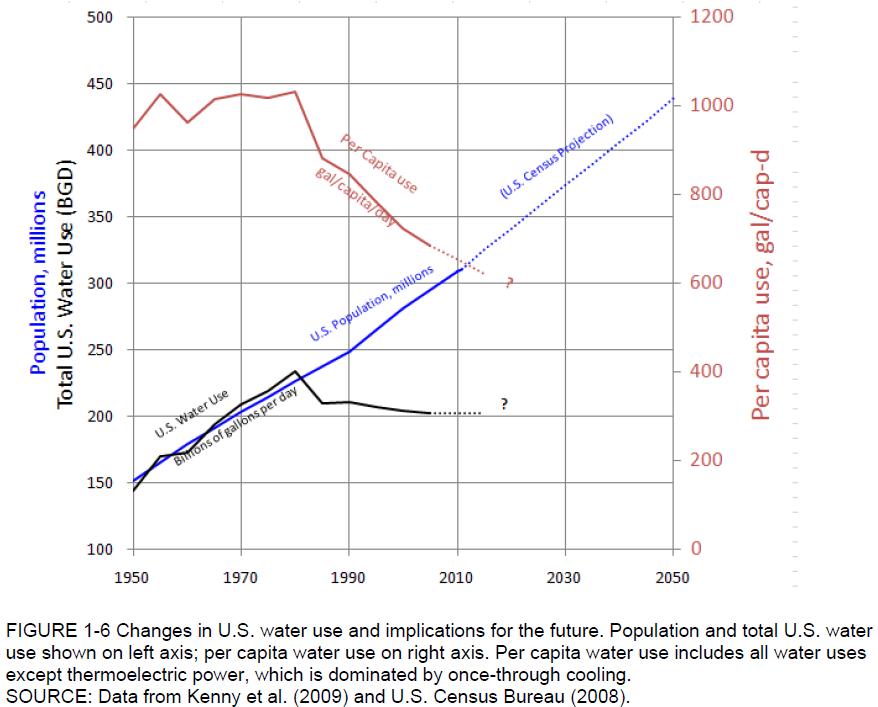
Changes in U.S. water use and implications for the future

It is interesting to see some data in Water Reuse: Expanding the Nation's Water Supply Through Reuse of Municipal Wastewater (http://www.nap.edu/catalog.php?record_id=13303), a National Research Council publication.

See for example figure 1-6, p 17, changes in U.S. water use and implications for the future:


Monday, May 14, 2012

Do Dynamic Provisions Enhance Bank Solvency and Reduce Credit Procyclicality? A Study of the Chilean Banking System

Do Dynamic Provisions Enhance Bank Solvency and Reduce Credit Procyclicality? A Study of the Chilean Banking System. By Jorge A. Chan-Lau
IMF Working Paper No. 12/124
http://www.imf.org/external/pubs/cat/longres.aspx?sk=25912.0

Summary: Dynamic provisions could help to enhance the solvency of individual banks and reduce procyclicality. Accomplishing these objectives depends on country-specific features of the banking system, business practices, and the calibration of the dynamic provisions scheme. In the case of Chile, a simulation analysis suggests Spanish dynamic provisions would improve banks' resilience to adverse shocks but would not reduce procyclicality. To address the latter, other countercyclical measures should be considered.


Excerpts

Introduction

It has long been acknowledged that procyclicality could pose risks to financial stability as noted by the academic and policy discussion centered on Basel II, accounting practices, and financial globalization. Recently, much attention has been focused on regulatory dynamic provisions (or statistical provisions). Under dynamic provisions, as banks build up their loan portfolio during an economic expansion, they should set aside provisions against future losses.

The use of dynamic provisions raises two questions bearing on financial stability. First, do dynamic provisions reduce insolvency risk? Second, do dynamic provisions reduce procyclicality? In theory the answer is yes to both questions. Provided loss estimates are roughly accurate, bank solvency is enhanced since buffers are built in advance ahead of the realization of large losses. Regulatory dynamic provisions could also discourage too rapid credit growth during the expansionary phase of the cycle, as it helps preventing a relaxation of provisioning practices.

However, when real data is brought to bear on the questions above the answers could diverge from what theory implies. This paper attempts to answer these questions in the specific case of Chile. It finds that the adoption of dynamic provisions could help to enhance bank solvency but it would not help to reduce procyclicality. The successful implementation of dynamic provisions, however, requires a careful calibration to match or exceed current provisioning practices, and it is worth noting that reliance on past data could lead to a false sense of security as loan losses are fat-tail events. Finally, since dynamic provisions may not be sufficient to counter procyclicality alternative measures should be considered, such as the proposed countercyclical capital buffers in Basel III and the countercyclical provision rule Peru implemented in 2008.


Conclusions

At the policy level, the case for regulatory dynamic provisions have been advanced on the grounds that they help reducing the risk of bank insolvency and dampening credit procyclicality. In the case of the Chile the data appears to partly validate these claims.

A simulation analysis suggests that under the Spanish dynamic provisions rule provision buffers against losses would be higher compared to those accumulated under current practices. The analysis also suggests that calibration based on historical data may not be adequate to deal with the presence of fat-tails in realized loan losses. Implementing dynamic provisions, therefore, requires a careful calibration of the regulatory model and stress testing loan-loss internal models.

Dynamic provision rules appear not to dampen procyclicality in Chile. Results from a VECM analysis indicate that the credit cycle does not respond to the level of or changes in aggregate provisions. In light of this result, it may be worth exploring other measures to address procyclicality. Two examples of these measures include countercyclical capital requirements, as proposed by the Basel Committee on Banking Supervision (2010a and b), or the countercyclical provision rule introduced in Peru in 2008. The Basel countercyclical capital requirements suggest that the build up and release of additional capital buffers should be conditioned on deviations of credit to GDP ratio from its long-run trend. The Peruvian rule, contrary to standard dynamic provision rules, requires banks to accumulate countercyclical provisions when GDP growth exceeds potential. Both measures, by tying up capital or provision accumulations to cyclical indicators, could be more effective for reducing procyclicality.

Sunday, May 13, 2012

What Tokyo's Governor supporters think

A Japanese correspondant wrote about what Tokyo's Governor supporters think (edited):
I'll reply one of your questions about Tokyo's governor. He is a famous writer in Japan. Once in Japan, it was said "Money can move Politics." A leading politician who provided private funds to friends in politics, Tokyo's governor was once a lawmaker.

He gained funds by his writer activity, always speak radical statements since he was young, and he had been clearly different from other influential politicians. He was independent. He always strives to influence politicians with his great ability.

Thus, he was on the side of populace.

However he became arrogant now. But the Japanese people expect great things from him, in particular, people living in the capital, Tokyo. He always talks about "Changing Japan from Tokyo."

We think that he can do it.

Yours,

Nakaki

Friday, May 11, 2012

IMF Policy Papers: Enhancing Financial Sector Surveillance in Low-Income Countries Series

IMF Policy Paper: Enhancing Financial Sector Surveillance in Low-Income Countries - Background Paper

Summary: This note provides an overview of the literature on the challenges posed by shallow financial systems for macroeconomic policy implementation. Countries with shallow markets are more likely to choose fixed exchange rates, less likely to use indirect measures as instruments of monetary policy, and to implement effective counter-cyclical fiscal policies. But causation appears to work in both directions, as policy stances can themselves affect financial development. Drawing on recent FSAP reports, the note also shows that shallow financial markets tend to increase foreign exchange, liquidity management, and concentration risks, posing risks for financial stability

http://www.imf.org/external/pp/longres.aspx?id=4650


---
IMF Policy Paper: Enhancing Financial Sector Surveillnace in Low-Income Countries - Financial Deepening and Macro-Stability

Summary: This paper aims to widen the lens through which surveillance is conducted in LICs, to better account for the interplay between financial deepening and macro-financial stability as called for in the 2011 Triennial Surveillance Review. Reflecting the inherent risk-return tradeoffs associated with financial deepening, the paper seeks to shed light on the policy and institutional impediments in LICs that have a bearing on the effectiveness of macroeconomic policies, macro-financial stability, and growth. The paper focuses attention on the role of enabling policies in facilitating sustainable financial deepening. In framing the discussion, the paper draws on a range of conceptual and analytical tools, empirical analyses, and case studies.

http://www.imf.org/external/pp/longres.aspx?id=4649


---
IMF Policy Paper: Enhancing Financial Sector Surveillance in Low-Income Countries - Case Studies

Summary: This supplement presents ten case studies, which highlight the roles of targeted policies to facilitate sustainable financial deepening in a variety of country circumstances, reflecting historical experiences that parallel a range of markets in LICs. The case studies were selected to broadly capture efforts by countries to increase reach (e.g., financial inclusion), depth (e.g., financial intermediation), and breadth of financial systems (e.g., capital market, cross-border development). The analysis in the case studies highlights the importance of a balanced approach to financial deepening. A stable macroeconomic environment is vital to instill consumer, institutional, and investor confidence necessary to encourage financial market activity. Targeted public policy initiatives (e.g., collateral, payment systems development) can be helpful in removing impediments and creating infrastructure for improved market operations, while ensuring appropriate oversight and regulation of financial markets, to address potential sources of instability and market failures.

http://www.imf.org/external/pp/longres.aspx?id=4651

Tuesday, May 8, 2012

Some scholars argue that top rates can be raised drastically with no loss of revenue

Of Course 70% Tax Rates Are Counterproductive. By Alan Reynolds
Some scholars argue that top rates can be raised drastically with no loss of revenue. Their arguments are flawed.WSJ, May 7, 2012
http://online.wsj.com/article/SB10001424052702303916904577376041258476020.html


President Obama and others are demanding that we raise taxes on the "rich," and two recent academic papers that have gotten a lot of attention claim to show that there will be no ill effects if we do.

The first paper, by Peter Diamond of MIT and Emmanuel Saez of the University of California, Berkeley, appeared in the Journal of Economic Perspectives last August. The second, by Mr. Saez, along with Thomas Piketty of the Paris School of Economics and Stefanie Stantcheva of MIT, was published by the National Bureau of Economic Research three months later. Both suggested that federal tax revenues would not decline even if the rate on the top 1% of earners were raised to 73%-83%.

Can the apex of the Laffer Curve—which shows that the revenue-maximizing tax rate is not the highest possible tax rate—really be that high?

The authors arrive at their conclusion through an unusual calculation of the "elasticity" (responsiveness) of taxable income to changes in marginal tax rates. According to a formula devised by Mr. Saez, if the elasticity is 1.0, the revenue-maximizing top tax rate would be 40% including state and Medicare taxes. That means the elasticity of taxable income (ETI) would have to be an unbelievably low 0.2 to 0.25 if the revenue-maximizing top tax rates were 73%-83% for the top 1%. The authors of both papers reach this conclusion with creative, if wholly unpersuasive, statistical arguments.

Most of the older elasticity estimates are for all taxpayers, regardless of income. Thus a recent survey of 30 studies by the Canadian Department of Finance found that "The central ETI estimate in the international empirical literature is about 0.40."

But the ETI for all taxpayers is going to be lower than for higher-income earners, simply because people with modest incomes and modest taxes are not willing or able to vary their income much in response to small tax changes. So the real question is the ETI of the top 1%.

Harvard's Raj Chetty observed in 2009 that "The empirical literature on the taxable income elasticity has generally found that elasticities are large (0.5 to 1.5) for individuals in the top percentile of the income distribution." In that same year, Treasury Department economist Bradley Heim estimated that the ETI is 1.2 for incomes above $500,000 (the top 1% today starts around $350,000).

A 2010 study by Anthony Atkinson (Oxford) and Andrew Leigh (Australian National University) about changes in tax rates on the top 1% in five Anglo-Saxon countries came up with an ETI of 1.2 to 1.6. In a 2000 book edited by University of Michigan economist Joel Slemrod ("Does Atlas Shrug?"), Robert A. Moffitt (Johns Hopkins) and Mark Wilhelm (Indiana) estimated an elasticity of 1.76 to 1.99 for gross income. And at the bottom of the range, Mr. Saez in 2004 estimated an elasticity of 0.62 for gross income for the top 1%.

A midpoint between the estimates would be an elasticity for gross income of 1.3 for the top 1%, and presumably an even higher elasticity for taxable income (since taxpayers can claim larger deductions if tax rates go up.)

But let's stick with an ETI of 1.3 for the top 1%. This implies that the revenue-maximizing top marginal rate would be 33.9% for all taxes, and below 27% for the federal income tax.

To avoid reaching that conclusion, Messrs. Diamond and Saez's 2011 paper ignores all studies of elasticity among the top 1%, and instead chooses a midpoint of 0.25 between one uniquely low estimate of 0.12 for gross income among all taxpayers (from a 2004 study by Mr. Saez and Jonathan Gruber of MIT) and the 0.40 ETI norm from 30 other studies.

That made-up estimate of 0.25 is the sole basis for the claim by Messrs. Diamond and Saez in their 2011 paper that tax rates could reach 73% without losing revenue.

The Saez-Piketty-Stantcheva paper does not confound a lowball estimate for all taxpayers with a midpoint estimate for the top 1%. On the contrary, the authors say that "the long-run total elasticity of top incomes with respect to the net-of-tax rate is large."

Nevertheless, to cut this "large" elasticity down, the authors begin by combining the U.S. with 17 other affluent economies, telling us that elasticity estimates for top incomes are lower for Europe and Japan. The resulting mélange—an 18-country "overall elasticity of around 0.5"—has zero relevance to U.S. tax policy.

Still, it is twice as large as the ETI of Messrs. Diamond and Saez, so the three authors appear compelled to further pare their 0.5 estimate down to 0.2 in order to predict a "socially optimal" top tax rate of 83%. Using "admittedly only suggestive" evidence, they assert that only 0.2 of their 0.5 ETI can be attributed to real supply-side responses to changes in tax rates.

The other three-fifths of ETI can just be ignored, according to Messrs. Saez and Piketty, and Ms. Stantcheva, because it is the result of, among other factors, easily-plugged tax loopholes resulting from lower rates on corporations and capital gains.

Plugging these so-called loopholes, they say, requires "aligning the tax rates on realized capital gains with those on ordinary income" and enacting "neutrality in the effective tax rates across organizational forms." In plain English: Tax rates on U.S. corporate profits, dividends and capital gains must also be 83%.

This raises another question: At that level, would there be any profits, capital gains or top incomes left to tax?

"The optimal top tax," the three authors also say, "actually goes to 100% if the real supply-side elasticity is very small." If anyone still imagines the proposed "socially optimal" tax rates of 73%-83% on the top 1% would raise revenues and have no effect on economic growth, what about that 100% rate?

Mr. Reynolds is a senior fellow with the Cato Institute and the author of "Income and Wealth" (Greenwood Press, 2006).