More Is Less: Learning But Not Relaxing Buffers Deviance Under Job Stressors. Chen Zhang, David Mayer and Eunbit Hwang. Journal of Applied Psychology, http://psycnet.apa.org/doiLanding?doi=10.1037/apl0000264
Abstract: Workplace deviance harms the well-being of an organization and its members. Unfortunately, theory and prior research suggest that deviance is associated with job stressors, which are endemic to work organizations and often cannot be easily eliminated. To address this conundrum, we explore actions individuals can take at work that serve as buffering conditions for the positive relationship between job stressors and deviant behavior. Drawing upon conservation of resources theory, we examine a resource-building activity (i.e., learning something new at work) and a demand-shielding activity (i.e., taking time for relaxation at work) as potential boundary conditions. In 2 studies with employee samples using complementary designs, we find support for the buffering role of learning but not for relaxation. When employees learn new things at work, the relationship between hindrance stressors and deviance is weaker; as is the indirect relationship mediated by negative emotions. Taking time for relaxation at work did not show a moderating role in either study. Therefore, although relaxation is a response that individuals might be inclined to turn to for counteracting work stress, our findings suggest that, when it comes to addressing negative emotions and deviance in stressful work environments, building positive resources by learning something new at work could be more useful. In that way, doing more (i.e., learning, and not relaxing) is associated with less (deviance) in the face of job stressors.
Wednesday, September 27, 2017


Echo Chamber? What Echo Chamber? Reviewing the Evidence
Echo Chamber? What Echo Chamber? Reviewing the Evidence. Axel Bruns. Future of Journalism 2017 Conference. http://www.cardiff.ac.uk/conferences/future-of-journalism-conference-2017, http://snurb.info/node/2263
Abstract: The success of political movements that appear to be immune to any factual evidence that contradicts their claims -- from the Brexiteers to the .alt-right., neo-fascist groups supporting Donald Trump -- has reinvigorated claims that social media spaces constitute so-called "filter bubbles" or "echo chambers". But while such claims may appear intuitively true to politicians and journalists -- who have themselves been accused of living in filter bubbles (Bradshaw 2016) --, the evidence that ordinary users experience their everyday social media environments as echo chambers is far more limited.
For instance, a 2016 Pew Center study has shown that only 23% of U.S. users on Facebook and 17% on Twitter now say with confidence that most of their contacts' views are similar to their own. 20% have changed their minds about a political or social issue because of interactions on social media (Duggan and Smith 2016). Similarly, large-scale studies of follower and interaction networks on Twitter (e.g. Bruns et al ., 2014) show that national Twitterspheres are often thoroughly interconnected and facilitate the flow of information across boundaries of personal ideology and interest, except for a few especially hardcore partisan communities.
Building on new, comprehensive data from a project that maps and tracks interactions between 4 million accounts in the Australian Twittersphere, this paper explores in detail the evidence for the existence of echo chambers in that country. It thereby moves the present debate beyond a merely anecdotal footing, and offers a more reliable assessment of the "echo chamber" threat.
Keywords: echo chamber, filter bubble, social media, Twitter, Australia, network analysis
Check also: Polarized Mass or Polarized Few? Assessing the Parallel Rise of Survey Nonresponse and Measures of Polarization. Amnon Cavari and Guy Freedman. The Journal of Politics,
https://www.bipartisanalliance.com/2018/03/polarized-mass-or-polarized-few.html
Abstract: The success of political movements that appear to be immune to any factual evidence that contradicts their claims -- from the Brexiteers to the .alt-right., neo-fascist groups supporting Donald Trump -- has reinvigorated claims that social media spaces constitute so-called "filter bubbles" or "echo chambers". But while such claims may appear intuitively true to politicians and journalists -- who have themselves been accused of living in filter bubbles (Bradshaw 2016) --, the evidence that ordinary users experience their everyday social media environments as echo chambers is far more limited.
For instance, a 2016 Pew Center study has shown that only 23% of U.S. users on Facebook and 17% on Twitter now say with confidence that most of their contacts' views are similar to their own. 20% have changed their minds about a political or social issue because of interactions on social media (Duggan and Smith 2016). Similarly, large-scale studies of follower and interaction networks on Twitter (e.g. Bruns et al ., 2014) show that national Twitterspheres are often thoroughly interconnected and facilitate the flow of information across boundaries of personal ideology and interest, except for a few especially hardcore partisan communities.
Building on new, comprehensive data from a project that maps and tracks interactions between 4 million accounts in the Australian Twittersphere, this paper explores in detail the evidence for the existence of echo chambers in that country. It thereby moves the present debate beyond a merely anecdotal footing, and offers a more reliable assessment of the "echo chamber" threat.
Keywords: echo chamber, filter bubble, social media, Twitter, Australia, network analysis
Check also: Polarized Mass or Polarized Few? Assessing the Parallel Rise of Survey Nonresponse and Measures of Polarization. Amnon Cavari and Guy Freedman. The Journal of Politics,
https://www.bipartisanalliance.com/2018/03/polarized-mass-or-polarized-few.html
Restrictive policies engender more support from stakeholders if to be implemented in the distant vs near future
It’s about time: Divergent evaluations of restrictive policies in the near and distant future. Nathaniel Nakashima, David Daniels and Kristin Laurin. Organizational Behavior and Human Decision Processes, Volume 142, September 2017, Pages 12-27, https://doi.org/10.1016/j.obhdp.2017.07.005
Abstract: When should leaders announce policies that create net benefits for organizations, but also restrict individual member choices? We find that restrictive policies engender more support from stakeholders when they are to be implemented in the distant versus near future (Studies 1 and 2). We find similar results when manipulating construal level instead of temporal distance (Study 3). The effect of temporal distance on attitudes toward a policy is mediated by people’s attention to different aspects of the policy (desirability vs. feasibility, pros vs. cons, self vs. other) (Study 4). Furthermore, temporal distance enhances support for policies that are high, but not low, in desirability for the collective (Study 5). The evidence is consistent with Construal Level Theory; we also consider Rational Choice Theory as an alternative perspective. Our findings suggest that leaders who wish to maximize member support for restrictive policies should consider announcing them well in advance of their implementation date.
Abstract: When should leaders announce policies that create net benefits for organizations, but also restrict individual member choices? We find that restrictive policies engender more support from stakeholders when they are to be implemented in the distant versus near future (Studies 1 and 2). We find similar results when manipulating construal level instead of temporal distance (Study 3). The effect of temporal distance on attitudes toward a policy is mediated by people’s attention to different aspects of the policy (desirability vs. feasibility, pros vs. cons, self vs. other) (Study 4). Furthermore, temporal distance enhances support for policies that are high, but not low, in desirability for the collective (Study 5). The evidence is consistent with Construal Level Theory; we also consider Rational Choice Theory as an alternative perspective. Our findings suggest that leaders who wish to maximize member support for restrictive policies should consider announcing them well in advance of their implementation date.
A beluga whale socialized with bottlenose dolphins imitates their whistles
A beluga whale socialized with bottlenose dolphins imitates their whistles. Elena M. Panova, and Alexandr V. Agafonov. Animal Cognition, https://doi.org/10.1007/s10071-017-1132-4
Abstract: The research on imitation in the animal kingdom has more than a century-long history. A specific kind of imitation, auditory–vocal imitation, is well known in birds, especially among songbirds and parrots, but data for mammals are limited to elephants, marine mammals, and humans. Cetaceans are reported to imitate various signals, including species–specific calls, artificial sounds, and even vocalizations from other species if they share the same habitat. Here we describe the changes in the vocal repertoire of a beluga whale that was housed with a group of bottlenose dolphins. Two months after the beluga’s introduction into a new facility, we found that it began to imitate whistles of the dolphins, whereas one type of its own calls seemed to disappear. The case reported here may be considered as an interesting phenomenon of vocal accommodation to new social companions and cross-species socialization in cetaceans.
Check also: Spontaneous cross-species imitation in interactions between chimpanzees and zoo visitors. Tomas Persson, Gabriela-Alina Sauciuc, and Elainie Alenkær Madsen. Primates, https://link.springer.com/article/10.1007/s10329-017-0624-9
Abstract: The research on imitation in the animal kingdom has more than a century-long history. A specific kind of imitation, auditory–vocal imitation, is well known in birds, especially among songbirds and parrots, but data for mammals are limited to elephants, marine mammals, and humans. Cetaceans are reported to imitate various signals, including species–specific calls, artificial sounds, and even vocalizations from other species if they share the same habitat. Here we describe the changes in the vocal repertoire of a beluga whale that was housed with a group of bottlenose dolphins. Two months after the beluga’s introduction into a new facility, we found that it began to imitate whistles of the dolphins, whereas one type of its own calls seemed to disappear. The case reported here may be considered as an interesting phenomenon of vocal accommodation to new social companions and cross-species socialization in cetaceans.
Check also: Spontaneous cross-species imitation in interactions between chimpanzees and zoo visitors. Tomas Persson, Gabriela-Alina Sauciuc, and Elainie Alenkær Madsen. Primates, https://link.springer.com/article/10.1007/s10329-017-0624-9
It’s not as bad as you think: menopausal representations are more positive in postmenopausal women
It’s not as bad as you think: menopausal representations are more positive in postmenopausal women. Lydia Brown, Valerie Brown, Fiona Judd & Christina Bryant. Journal of Psychosomatic Obstetrics & Gynecology, http://dx.doi.org/10.1080/0167482X.2017.1368486
Abstract
Introduction: The menopausal transition is associated with underlying hormonal changes that can contribute to a range of physical and emotional symptoms. Psycho-social factors including attitudes and internal representations play a central role in women’s experience of the menopause, but very little is known about how representations might differ across menopausal stages.
Methods: A sample of 387 women aged 40–60 completed a postal questionnaire that included the menopausal representations questionnaire, the emotional representation subscale adapted from the illness perception questionnaire, and data on menopausal status.
Results: Significant differences across menopausal stages were found for both cognitive [F(2, 381) = 4.32, p < .05, η2 = 0.022], and emotional [F(2, 381) = 9.70, p < .01, η2 = 0.048] menopausal representations. Postmenopausal women had a significantly more positive cognitive representations of the menopause relative to perimenopausal women (standardised mean difference = 0.25, p > .05). Postmenopausal women held a significantly more positive emotional representation of the menopause than both premenopausal (standardised mean difference = 0.56, p < .05) and perimenopausal (standardised mean difference = 0.43, p < .05) women.
Discussion: Women’s emotional and cognitive representations of the menopause are more positive among postmenopausal women, compared to women in the late premenopausal stage. This is consistent with the affective forecasting theory, which proposes the tendency to overestimate the intensity and duration of emotional reactions to future events. Given the association between representations and bothersomeness of menopausal symptoms, clinicians should educate women about their expectations, and challenge their negative beliefs about the menopause.
Keywords: Climacterium, menopause, perimenopause, psychological wellbeing, cognitions
Abstract
Introduction: The menopausal transition is associated with underlying hormonal changes that can contribute to a range of physical and emotional symptoms. Psycho-social factors including attitudes and internal representations play a central role in women’s experience of the menopause, but very little is known about how representations might differ across menopausal stages.
Methods: A sample of 387 women aged 40–60 completed a postal questionnaire that included the menopausal representations questionnaire, the emotional representation subscale adapted from the illness perception questionnaire, and data on menopausal status.
Results: Significant differences across menopausal stages were found for both cognitive [F(2, 381) = 4.32, p < .05, η2 = 0.022], and emotional [F(2, 381) = 9.70, p < .01, η2 = 0.048] menopausal representations. Postmenopausal women had a significantly more positive cognitive representations of the menopause relative to perimenopausal women (standardised mean difference = 0.25, p > .05). Postmenopausal women held a significantly more positive emotional representation of the menopause than both premenopausal (standardised mean difference = 0.56, p < .05) and perimenopausal (standardised mean difference = 0.43, p < .05) women.
Discussion: Women’s emotional and cognitive representations of the menopause are more positive among postmenopausal women, compared to women in the late premenopausal stage. This is consistent with the affective forecasting theory, which proposes the tendency to overestimate the intensity and duration of emotional reactions to future events. Given the association between representations and bothersomeness of menopausal symptoms, clinicians should educate women about their expectations, and challenge their negative beliefs about the menopause.
Keywords: Climacterium, menopause, perimenopause, psychological wellbeing, cognitions
Taking Facebook at face value: why the use of social media may cause mental disorder
Østergaard, S. D. (2017), Taking Facebook at face value: why the use of social media may cause mental disorder. Acta Psychiatr Scand. doi:10.1111/acps.12819
Facebook, the largest social media network, currently has approximately 2 billion monthly users [1], corresponding to more than 25% of the world's population. While the existence of an online social network may seem harmless or even beneficial, a series of recent studies have suggested that use of Facebook and other social media platforms may have a negative influence on mental health [2-5].
In a recent longitudinal study based on three ‘waves’ of data (2013, 2014, and 2015) from more than 5000 participants in the nationally representative Gallup Panel Social Network Study, Shakya and Christakis found that the use of Facebook (which was measured objectively) was negatively associated with self-reported mental well-being [3]. Both clicking ‘like’ on the content of others’ Facebook pages and posting ‘status updates’ on one's own Facebook page were negatively associated with mental well-being. Importantly, these results were robust to two-wave prospective analyses suggesting that the direction of the effect goes from Facebook use to lower mental well-being and not the other way around [3]. However, due to the observational nature of the analyzed data, these results do not represent causal evidence of a harmful effect of Facebook, but probably—due to the longitudinal nature of the study—represent the best available estimate of the effect of Facebook on mental well-being to date [3]. Another recent study supporting that Facebook use could have a negative effect on well-being is that of Tromholt [5] in which the 1095 participants were randomly assigned (or rather randomly urged) to follow one of two instructions: (i) ‘Keep using Facebook as usual in the following week’, or (ii) ‘Do not use Facebook in the following week’ [5]. After this week, those assigned to the Facebook abstinence group reported significantly higher life satisfaction and more positive emotions than those assigned to the ‘Facebook as usual’ group [5]. However, due to the unblinded design of this study, its results do not represent causal evidence of the effect of Facebook either—an effect, which will be difficult to establish.
If we nevertheless assume that Facebook use indeed has a harmful effect on mental well-being, what is then the mechanism underlying it? This aspect remains unclear, but an intuitively logical explanation—with some empirical support—is that people predominantly display the most positive aspects of their lives on social media [6] and that other people—who tend to take these positively biased projections at face value—therefore get the impression that their own life compares negatively to that of other Facebook users [7]. As indicated by the recent findings by Hanna et al., such upward social comparison is very likely to mediate the negative effect of Facebook use on mental well-being [4].
Facebook, the largest social media network, currently has approximately 2 billion monthly users [1], corresponding to more than 25% of the world's population. While the existence of an online social network may seem harmless or even beneficial, a series of recent studies have suggested that use of Facebook and other social media platforms may have a negative influence on mental health [2-5].
In a recent longitudinal study based on three ‘waves’ of data (2013, 2014, and 2015) from more than 5000 participants in the nationally representative Gallup Panel Social Network Study, Shakya and Christakis found that the use of Facebook (which was measured objectively) was negatively associated with self-reported mental well-being [3]. Both clicking ‘like’ on the content of others’ Facebook pages and posting ‘status updates’ on one's own Facebook page were negatively associated with mental well-being. Importantly, these results were robust to two-wave prospective analyses suggesting that the direction of the effect goes from Facebook use to lower mental well-being and not the other way around [3]. However, due to the observational nature of the analyzed data, these results do not represent causal evidence of a harmful effect of Facebook, but probably—due to the longitudinal nature of the study—represent the best available estimate of the effect of Facebook on mental well-being to date [3]. Another recent study supporting that Facebook use could have a negative effect on well-being is that of Tromholt [5] in which the 1095 participants were randomly assigned (or rather randomly urged) to follow one of two instructions: (i) ‘Keep using Facebook as usual in the following week’, or (ii) ‘Do not use Facebook in the following week’ [5]. After this week, those assigned to the Facebook abstinence group reported significantly higher life satisfaction and more positive emotions than those assigned to the ‘Facebook as usual’ group [5]. However, due to the unblinded design of this study, its results do not represent causal evidence of the effect of Facebook either—an effect, which will be difficult to establish.
If we nevertheless assume that Facebook use indeed has a harmful effect on mental well-being, what is then the mechanism underlying it? This aspect remains unclear, but an intuitively logical explanation—with some empirical support—is that people predominantly display the most positive aspects of their lives on social media [6] and that other people—who tend to take these positively biased projections at face value—therefore get the impression that their own life compares negatively to that of other Facebook users [7]. As indicated by the recent findings by Hanna et al., such upward social comparison is very likely to mediate the negative effect of Facebook use on mental well-being [4].
Tuesday, September 26, 2017
Seeing live theater yields higher levels of tolerance, social perspective taking, & stronger command of the plot & vocabulary of those plays
Greene, Jay P. and Holmes Erickson, Heidi and Watson, Angela and Beck, Molly, The Play's the Thing: Experimentally Examining the Social and Cognitive Effects of School Field Trips to Live Theater Performances (August 31, 2017). EDRE Working Paper No. 2017-13. Available at SSRN: https://ssrn.com/abstract=3030928
Abstract: Field trips to see theater performances are a long-standing educational practice, however, there is little systematic evidence demonstrating educational benefits. This article describes the results of five random assignment experiments spanning two years where school groups were assigned by lottery to attend a live theater performance, or for some groups, watch a movie-version of the same story. We find significant educational benefits from seeing live theater, including higher levels of tolerance, social perspective taking, and stronger command of the plot and vocabulary of those plays. Students randomly assigned to watch a movie did not experience these benefits. Our findings also suggest that theater field trips may cultivate the desire among students to frequent the theater in the future.
Abstract: Field trips to see theater performances are a long-standing educational practice, however, there is little systematic evidence demonstrating educational benefits. This article describes the results of five random assignment experiments spanning two years where school groups were assigned by lottery to attend a live theater performance, or for some groups, watch a movie-version of the same story. We find significant educational benefits from seeing live theater, including higher levels of tolerance, social perspective taking, and stronger command of the plot and vocabulary of those plays. Students randomly assigned to watch a movie did not experience these benefits. Our findings also suggest that theater field trips may cultivate the desire among students to frequent the theater in the future.
More modesty, less trust -- The law of Jante
The Law of Jante and generalized trust. Cornelius Cappelen & Stefan Dahlberg. Acta Sociologica, https://doi.org/10.1177/0001699317717319
Abstract: A widespread cultural phenomenon – and/or individual disposition – is the idea that one should never try to be more, try to be different, or consider oneself more valuable than other people. In Scandinavia this code of modesty is referred to as the ‘Jante mentality’, in Anglo-Saxon societies the ‘tall puppy syndrome’, and in Asian cultures ‘the nail that stands out gets hammered down’. The study reported here examines how this modesty code relates to generalized trust. We argue, prima facie, that a positive and a negative relationship are equally plausible. Representative samples of the Norwegian population were asked about their agreement with the Jante mentality and the extent to which they have trust in other people. Two population surveys were conducted; one measuring individual level associations and another measuring aggregate level associations. It was found that the relationship between having a Jante mentality and trust is negative, at both levels of analysis and, furthermore, that the Jante mentality – this modesty code assumed to be instilled in Scandinavians from early childhood – is a powerful predictor of generalized trust.
Abstract: A widespread cultural phenomenon – and/or individual disposition – is the idea that one should never try to be more, try to be different, or consider oneself more valuable than other people. In Scandinavia this code of modesty is referred to as the ‘Jante mentality’, in Anglo-Saxon societies the ‘tall puppy syndrome’, and in Asian cultures ‘the nail that stands out gets hammered down’. The study reported here examines how this modesty code relates to generalized trust. We argue, prima facie, that a positive and a negative relationship are equally plausible. Representative samples of the Norwegian population were asked about their agreement with the Jante mentality and the extent to which they have trust in other people. Two population surveys were conducted; one measuring individual level associations and another measuring aggregate level associations. It was found that the relationship between having a Jante mentality and trust is negative, at both levels of analysis and, furthermore, that the Jante mentality – this modesty code assumed to be instilled in Scandinavians from early childhood – is a powerful predictor of generalized trust.
Low relational mobility leads to greater motivation to understand enemies but not friends and acquaintances
Low relational mobility leads to greater motivation to understand enemies but not friends and acquaintances. Liman Man Wai Li, Takahiko Masuda & Hajin Lee. British Journal of Social Psychology, onlinelibrary.wiley.com/doi/10.1111/bjso.12216/abstract
Abstract: Enemyship occurs across societies, but it has not received as much attention as other types of relationships such as friendship in previous research. This research examined the influence of relational mobility on people's motivation to understand their personal enemies by measuring different dependent variables across three studies. First, a cross-cultural comparison study found that Hong Kong Chinese, from a low-relational-mobility society, reported a stronger desire to seek proximity to enemies relative to European Canadians, from a high-relational-mobility society (Study 1). To test causality, two manipulation studies were conducted. Participants were presented with images of co-workers, including enemies, friends, and acquaintances, in a hypothetical company. The results showed that the participants who perceived lower relational mobility paid more attention to their enemies in an eye-tracking task (Study 2) and had a higher accuracy rate for recognizing the faces of the enemies in an incidental memory test (Study 3). In contrast, the influence of relational mobility on motivation to understand friends and acquaintances was minimal. Implications for research on interpersonal relationships and relational mobility are discussed.
Abstract: Enemyship occurs across societies, but it has not received as much attention as other types of relationships such as friendship in previous research. This research examined the influence of relational mobility on people's motivation to understand their personal enemies by measuring different dependent variables across three studies. First, a cross-cultural comparison study found that Hong Kong Chinese, from a low-relational-mobility society, reported a stronger desire to seek proximity to enemies relative to European Canadians, from a high-relational-mobility society (Study 1). To test causality, two manipulation studies were conducted. Participants were presented with images of co-workers, including enemies, friends, and acquaintances, in a hypothetical company. The results showed that the participants who perceived lower relational mobility paid more attention to their enemies in an eye-tracking task (Study 2) and had a higher accuracy rate for recognizing the faces of the enemies in an incidental memory test (Study 3). In contrast, the influence of relational mobility on motivation to understand friends and acquaintances was minimal. Implications for research on interpersonal relationships and relational mobility are discussed.
The Split-Brain Phenomenon Revisited: A Single Conscious Agent with Split Perception
The Split-Brain Phenomenon Revisited: A Single Conscious Agent with Split Perception. Yair Pinto, Edward H.F de Haan, and Victor A.F. Lamme. Trends in Cognitive Sciences, https://doi.org/10.1016/j.tics.2017.09.003
Abstract: The split-brain phenomenon is caused by the surgical severing of the corpus callosum, the main route of communication between the cerebral hemispheres. The classical view of this syndrome asserts that conscious unity is abolished. The left hemisphere consciously experiences and functions independently of the right hemisphere. This view is a cornerstone of current consciousness research. In this review, we first discuss the evidence for the classical view. We then propose an alternative, the ‘conscious unity, split perception’ model. This model asserts that a split brain produces one conscious agent who experiences two parallel, unintegrated streams of information. In addition to changing our view of the split-brain phenomenon, this new model also poses a serious challenge for current dominant theories of consciousness.
Trends
Five hallmarks characterize the split-brain syndrome: a response × visual field interaction, strong hemispheric specialization, confabulations after left-hand actions, split attention, and the inability to compare stimuli across the midline.
These hallmarks underlie the classical notion that split brain implies split consciousness. This notion suggests that massive interhemispheric communication is necessary for conscious unity.
Closer examination challenges the classical notion. Either the hallmark also occurs in healthy adults or the hallmark does not hold up for all split-brain patients.
A re-evaluation of the split-brain data suggests a new model that might better account for the data. This model asserts that a split-brain patient is one conscious agent with unintegrated visual perception.
This new model challenges prominent theories of consciousness, since it implies that massive communication is not needed for conscious unity.
Keywords: global workspace; information integration theory; recurrent processing; split brain; unified consciousness
Abstract: The split-brain phenomenon is caused by the surgical severing of the corpus callosum, the main route of communication between the cerebral hemispheres. The classical view of this syndrome asserts that conscious unity is abolished. The left hemisphere consciously experiences and functions independently of the right hemisphere. This view is a cornerstone of current consciousness research. In this review, we first discuss the evidence for the classical view. We then propose an alternative, the ‘conscious unity, split perception’ model. This model asserts that a split brain produces one conscious agent who experiences two parallel, unintegrated streams of information. In addition to changing our view of the split-brain phenomenon, this new model also poses a serious challenge for current dominant theories of consciousness.
Trends
Five hallmarks characterize the split-brain syndrome: a response × visual field interaction, strong hemispheric specialization, confabulations after left-hand actions, split attention, and the inability to compare stimuli across the midline.
These hallmarks underlie the classical notion that split brain implies split consciousness. This notion suggests that massive interhemispheric communication is necessary for conscious unity.
Closer examination challenges the classical notion. Either the hallmark also occurs in healthy adults or the hallmark does not hold up for all split-brain patients.
A re-evaluation of the split-brain data suggests a new model that might better account for the data. This model asserts that a split-brain patient is one conscious agent with unintegrated visual perception.
This new model challenges prominent theories of consciousness, since it implies that massive communication is not needed for conscious unity.
Keywords: global workspace; information integration theory; recurrent processing; split brain; unified consciousness
Fewer adolescents engaged in adult activities such as having sex, dating, drinking alcohol, working for pay, going out without their parents, & driving
Twenge, J. M. and Park, H. (2017), The Decline in Adult Activities Among U.S. Adolescents, 1976–2016. Child Dev. doi:10.1111/cdev.12930
Abstract: The social and historical contexts may influence the speed of development. In seven large, nationally representative surveys of U.S. adolescents 1976–2016 (N = 8.44 million, ages 13–19), fewer adolescents in recent years engaged in adult activities such as having sex, dating, drinking alcohol, working for pay, going out without their parents, and driving, suggesting a slow life strategy. Adult activities were less common when median income, life expectancy, college enrollment, and age at first birth were higher and family size and pathogen prevalence were lower, consistent with life history theory. The trends are unlikely to be due to homework and extracurricular time, which stayed steady or declined, and may or may not be linked to increased Internet use.
Abstract: The social and historical contexts may influence the speed of development. In seven large, nationally representative surveys of U.S. adolescents 1976–2016 (N = 8.44 million, ages 13–19), fewer adolescents in recent years engaged in adult activities such as having sex, dating, drinking alcohol, working for pay, going out without their parents, and driving, suggesting a slow life strategy. Adult activities were less common when median income, life expectancy, college enrollment, and age at first birth were higher and family size and pathogen prevalence were lower, consistent with life history theory. The trends are unlikely to be due to homework and extracurricular time, which stayed steady or declined, and may or may not be linked to increased Internet use.
Monday, September 25, 2017
Contradicting effects of self-insight: Self-insight can conditionally contribute to increased depressive symptoms
Contradicting effects of self-insight: Self-insight can conditionally contribute to increased depressive symptoms. Miho Nakajima, Keisuke Takano, and Yoshihiko Tanno. Personality and Individual Differences, Volume 120, 1 January 2018, Pages 127–132, https://doi.org/10.1016/j.paid.2017.08.033
Highlights
• Self-insight has been considered as a factor that enhances psychological adjustment.
• However, we found that the adaptive effect of self-insight was conditional.
• Self-insight with high negative self-complexity was related to increased depression.
Abstract: Past research has suggested that self-insight functions as a genuine factor to enhance psychological adjustment. However, because most of the previous studies had used a cross-sectional design, a prospective study was warranted to establish the temporal and causal relationship between self-insight and depressive symptoms. Another important issue was that there seems to be a moderator that influences the adaptive function of self-insight. Stein and Grant (2014) suggested that positive self-evaluation mediates the association between self-insight and well-being. This result could imply that self-insight does not lead to well-being with negative self-evaluation. In this study, therefore, we conducted a longitudinal questionnaire survey to examine the prospective effect of self-insight on future depressive symptoms with self-complexity as a putative moderator. A complete dataset of 93 Japanese undergraduates was analyzed. The prospective analysis showed a significant moderating role of negative self-complexity in the associations among self-insight, depressive symptoms, and stress; people with high self-insight and low negative self-complexity were less likely to be influenced by stressors, whereas those with high self-insight and high negative self-complexity showed significant increases in depressive symptoms after stressful experiences. These findings implicate that the adaptive effect of self-insight can be conditional depending on the extent of negative self-complexity.
Keywords: Self-insight; Self-complexity; Depressive symptoms
Highlights
• Self-insight has been considered as a factor that enhances psychological adjustment.
• However, we found that the adaptive effect of self-insight was conditional.
• Self-insight with high negative self-complexity was related to increased depression.
Abstract: Past research has suggested that self-insight functions as a genuine factor to enhance psychological adjustment. However, because most of the previous studies had used a cross-sectional design, a prospective study was warranted to establish the temporal and causal relationship between self-insight and depressive symptoms. Another important issue was that there seems to be a moderator that influences the adaptive function of self-insight. Stein and Grant (2014) suggested that positive self-evaluation mediates the association between self-insight and well-being. This result could imply that self-insight does not lead to well-being with negative self-evaluation. In this study, therefore, we conducted a longitudinal questionnaire survey to examine the prospective effect of self-insight on future depressive symptoms with self-complexity as a putative moderator. A complete dataset of 93 Japanese undergraduates was analyzed. The prospective analysis showed a significant moderating role of negative self-complexity in the associations among self-insight, depressive symptoms, and stress; people with high self-insight and low negative self-complexity were less likely to be influenced by stressors, whereas those with high self-insight and high negative self-complexity showed significant increases in depressive symptoms after stressful experiences. These findings implicate that the adaptive effect of self-insight can be conditional depending on the extent of negative self-complexity.
Keywords: Self-insight; Self-complexity; Depressive symptoms
Sleep pressure after sleep deprivation in flies can be counteracted by raising their sexual arousal
Regulation of sleep homeostasis by sexual arousal. Esteban J Beckwith et al. eLife 2017;6:e27445 doi: 10.7554/eLife.27445
Abstract: In all animals, sleep pressure is under continuous tight regulation. It is universally accepted that this regulation arises from a two-process model, integrating both a circadian and a homeostatic controller. Here we explore the role of environmental social signals as a third, parallel controller of sleep homeostasis and sleep pressure. We show that, in Drosophila melanogaster males, sleep pressure after sleep deprivation can be counteracted by raising their sexual arousal, either by engaging the flies with prolonged courtship activity or merely by exposing them to female pheromones.
---
Finally, to investigate whether mere sexual arousal is responsible for this effect, we used flies mutant in the TDC2 gene, that possess lower levels of tyramine and octopamine (Crocker and Sehgal, 2008) and were previously shown to court male as well as female flies (Huang et al., 2016). We hypothesised that if these flies are sexually aroused by both male and female partners, they should then respond with a suppression of sleep rebound to both conditions of social interaction. This was what we observed indeed (Figure 8D,E). In flies with a bi-sexual orientation, both MF and MM interaction lead to a strong suppression of sleep rebound.
[...] migratory birds and cetaceans were reported to have the ability to suppress sleep at certain important periods of their lives, namely during migration or immediately after giving birth (Fuchs et al., 2009; Lyamin et al., 2005; Rattenborg et al., 2004); flies, similarly, were shown to lack sleep rebound after starvation-induced sleep deprivation (Thimgan et al., 2010) or after induction of sleep deprivation through specific neuronal clusters (Seidner et al., 2015). Perhaps even more fitting with our findings is the observation that male pectoral sandpipers, a type of Arctic bird, can forego sleep in favour of courtship during the three weeks time window of female fertility (Lesku et al., 2012). It appears, therefore, that animals are able to balance sleep needs with other, various, biological drives. It would be interesting to see whether these drives act to suppress sleep through a common regulatory circuit. Rebound sleep has always been considered one of the most important features of sleep itself. Together with the reported death by sleep deprivation, it is frequently used in support of the hypothesis that sleep is not an accessory phenomenon but a basic need of the organism (Cirelli and Tononi, 2008). Understanding the regulation of rebound sleep, therefore, may be crucial to understanding the very function of sleep. Interestingly, in our paradigm rebound sleep is not postponed, but rather eliminated. Moreover, on rebound day, the sleep architecture of sexually aroused male flies does not seem to be affected: the sleep bout numbers appear to be similar to their mock control counterparts, while the length of sleep bouts is, if anything, slightly reduced (Figure 1 – figure supplement 1).
Abstract: In all animals, sleep pressure is under continuous tight regulation. It is universally accepted that this regulation arises from a two-process model, integrating both a circadian and a homeostatic controller. Here we explore the role of environmental social signals as a third, parallel controller of sleep homeostasis and sleep pressure. We show that, in Drosophila melanogaster males, sleep pressure after sleep deprivation can be counteracted by raising their sexual arousal, either by engaging the flies with prolonged courtship activity or merely by exposing them to female pheromones.
---
Finally, to investigate whether mere sexual arousal is responsible for this effect, we used flies mutant in the TDC2 gene, that possess lower levels of tyramine and octopamine (Crocker and Sehgal, 2008) and were previously shown to court male as well as female flies (Huang et al., 2016). We hypothesised that if these flies are sexually aroused by both male and female partners, they should then respond with a suppression of sleep rebound to both conditions of social interaction. This was what we observed indeed (Figure 8D,E). In flies with a bi-sexual orientation, both MF and MM interaction lead to a strong suppression of sleep rebound.
[...] migratory birds and cetaceans were reported to have the ability to suppress sleep at certain important periods of their lives, namely during migration or immediately after giving birth (Fuchs et al., 2009; Lyamin et al., 2005; Rattenborg et al., 2004); flies, similarly, were shown to lack sleep rebound after starvation-induced sleep deprivation (Thimgan et al., 2010) or after induction of sleep deprivation through specific neuronal clusters (Seidner et al., 2015). Perhaps even more fitting with our findings is the observation that male pectoral sandpipers, a type of Arctic bird, can forego sleep in favour of courtship during the three weeks time window of female fertility (Lesku et al., 2012). It appears, therefore, that animals are able to balance sleep needs with other, various, biological drives. It would be interesting to see whether these drives act to suppress sleep through a common regulatory circuit. Rebound sleep has always been considered one of the most important features of sleep itself. Together with the reported death by sleep deprivation, it is frequently used in support of the hypothesis that sleep is not an accessory phenomenon but a basic need of the organism (Cirelli and Tononi, 2008). Understanding the regulation of rebound sleep, therefore, may be crucial to understanding the very function of sleep. Interestingly, in our paradigm rebound sleep is not postponed, but rather eliminated. Moreover, on rebound day, the sleep architecture of sexually aroused male flies does not seem to be affected: the sleep bout numbers appear to be similar to their mock control counterparts, while the length of sleep bouts is, if anything, slightly reduced (Figure 1 – figure supplement 1).
Do casual gaming environments evoke stereotype threat? Examining the effects of explicit priming and avatar gender
Do casual gaming environments evoke stereotype threat? Examining the effects of explicit priming and avatar gender. Linda K. Kaye. Charlotte R. Pennington, and Joseph J. McCann. Computers in Human Behavior, https://doi.org/10.1016/j.chb.2017.09.031
Highlights
• Assessing stereotype threat in an under-explored domain.
• Operationalising avatar gender as a subtle threat on gaming outcomes.
• No evidence of stereotype threat effects on gaming performance.
Abstract: Despite relatively equal participation rates between females and males in casual gaming, females often report stigmatisation and prejudice towards their gaming competency within this sub-domain. Applying the theoretical framework of “stereotype threat”, this research examined the influence of explicit stereotype priming on females' casual gameplay performance and related attitudes. It also investigated whether the gender of the game avatar heightens susceptibility to stereotype threat. One hundred and twenty females were allocated randomly to one of four experimental conditions in a 2 (Condition: Stereotype threat, Control) x 2 (Avatar gender: Feminine, Masculine) between-subjects design. They completed a short gaming task and measures of social identity, competence beliefs, gameplay self-efficacy and self-esteem. Findings indicate that priming explicitly a negative gender-related stereotype did not appear to have a significant detrimental impact on gameplay performance or gameplay-related attitudes. Additionally, gameplay performance was not affected significantly by manipulating the gender of the gaming avatar. These findings suggest that, although females appear to be knowledgeable about negative gender-gaming stereotypes, these might not impact performance. Moreover, females tend not to endorse these beliefs as a true reflection of their gaming ability, representing a positive finding in view of the prevailing negative attitudes they face in gaming domains.
Keywords: Stereotype threat; Digital gaming; Competence; Self-concept; Gender; Avatars
Highlights
• Assessing stereotype threat in an under-explored domain.
• Operationalising avatar gender as a subtle threat on gaming outcomes.
• No evidence of stereotype threat effects on gaming performance.
Abstract: Despite relatively equal participation rates between females and males in casual gaming, females often report stigmatisation and prejudice towards their gaming competency within this sub-domain. Applying the theoretical framework of “stereotype threat”, this research examined the influence of explicit stereotype priming on females' casual gameplay performance and related attitudes. It also investigated whether the gender of the game avatar heightens susceptibility to stereotype threat. One hundred and twenty females were allocated randomly to one of four experimental conditions in a 2 (Condition: Stereotype threat, Control) x 2 (Avatar gender: Feminine, Masculine) between-subjects design. They completed a short gaming task and measures of social identity, competence beliefs, gameplay self-efficacy and self-esteem. Findings indicate that priming explicitly a negative gender-related stereotype did not appear to have a significant detrimental impact on gameplay performance or gameplay-related attitudes. Additionally, gameplay performance was not affected significantly by manipulating the gender of the gaming avatar. These findings suggest that, although females appear to be knowledgeable about negative gender-gaming stereotypes, these might not impact performance. Moreover, females tend not to endorse these beliefs as a true reflection of their gaming ability, representing a positive finding in view of the prevailing negative attitudes they face in gaming domains.
Keywords: Stereotype threat; Digital gaming; Competence; Self-concept; Gender; Avatars
Hypocognition impoverishes one’s mental world, leaving cognitive deficits in recognition, explanation & memory while fueling social chauvinism & conflict in political & cultural spheres
Wu, K., & Dunning, D. (2017). Hypocognition: Making Sense of the Landscape Beyond One’s Conceptual Reach. Review of General Psychology, http://dx.doi.org/10.1037/gpr0000126
Abstract: People think, feel, and behave within the confines of what they can conceive. Outside that conceptual landscape, people exhibit hypocognition (i.e., lacking cognitive or linguistic representations of concepts to describe ideas or explicate experiences). We review research on the implications of hypocognition for cognition and behavior. Drawing on the expertise and cross-cultural literatures, we describe how hypocognition impoverishes one’s mental world, leaving cognitive deficits in recognition, explanation, and memory while fueling social chauvinism and conflict in political and cultural spheres. Despite its pervasive consequences, people cannot be expected to identify when they are in a hypocognitive state, mistaking what they conceive for the totality of all that there is. To the extent that their channel of knowledge becomes too narrow, people risk submitting to hypocognition’s counterpart, hypercognition (i.e., the mistaken overapplication of other available conceptual notions to issues outside their actual relevance).
Abstract: People think, feel, and behave within the confines of what they can conceive. Outside that conceptual landscape, people exhibit hypocognition (i.e., lacking cognitive or linguistic representations of concepts to describe ideas or explicate experiences). We review research on the implications of hypocognition for cognition and behavior. Drawing on the expertise and cross-cultural literatures, we describe how hypocognition impoverishes one’s mental world, leaving cognitive deficits in recognition, explanation, and memory while fueling social chauvinism and conflict in political and cultural spheres. Despite its pervasive consequences, people cannot be expected to identify when they are in a hypocognitive state, mistaking what they conceive for the totality of all that there is. To the extent that their channel of knowledge becomes too narrow, people risk submitting to hypocognition’s counterpart, hypercognition (i.e., the mistaken overapplication of other available conceptual notions to issues outside their actual relevance).
We remember lies better than truths, but we expect the opposite
Besken, M. (2017). Generating Lies Produces Lower Memory Predictions and Higher Memory Performance Than Telling the Truth: Evidence for a Metacognitive Illusion. Journal of Experimental Psychology: Learning, Memory, and Cognition, http://dx.doi.org/10.1037/xlm0000459
Abstract: Manipulations that induce disfluency during encoding generally produce lower memory predictions for the disfluent condition than for the fluent condition. Similar to other manipulations of disfluency, generating lies takes longer and requires more mental effort than does telling the truth; hence, a manipulation of lie generation might produce patterns similar to other types of fluency for memory predictions. The current study systematically investigates the effect of a lie-generation manipulation on both actual and predicted memory performance. In a series of experiments, participants told the truth or generated plausible lies to general knowledge questions and made item-by-item predictions about their subsequent memory performance during encoding, followed by a free recall test. Participants consistently predicted their memory performance to be higher for truth than for lies (Experiments 1 through 4), despite their typically superior actual memory performance for lies than for the truth (Experiments 1 through 3), producing double dissociations between memory and metamemory. Moreover, lying led to longer response latencies than did telling the truth, showing that generating lies is in fact objectively more disfluent. An additional experiment compared memory predictions for truth and lie trials via a scenario about the lie-generation manipulation used in the present study, which revealed superior memory predictions of truth than of lies, providing proof for a priori beliefs about the effects of lying on predicted memory (Experiment 5). The effects of the current lie-generation manipulation on metamemory are discussed in light of experience-based and theory-based processes on making judgments of learning. Theoretical and practical implications of this experimental paradigm are also considered.
---
My commentary: We remember lies better than truths, but we expect the opposite ("revealed superior memory predictions of truth than of lies, providing proof for a priori beliefs about the effects of lying on predicted memory").
Abstract: Manipulations that induce disfluency during encoding generally produce lower memory predictions for the disfluent condition than for the fluent condition. Similar to other manipulations of disfluency, generating lies takes longer and requires more mental effort than does telling the truth; hence, a manipulation of lie generation might produce patterns similar to other types of fluency for memory predictions. The current study systematically investigates the effect of a lie-generation manipulation on both actual and predicted memory performance. In a series of experiments, participants told the truth or generated plausible lies to general knowledge questions and made item-by-item predictions about their subsequent memory performance during encoding, followed by a free recall test. Participants consistently predicted their memory performance to be higher for truth than for lies (Experiments 1 through 4), despite their typically superior actual memory performance for lies than for the truth (Experiments 1 through 3), producing double dissociations between memory and metamemory. Moreover, lying led to longer response latencies than did telling the truth, showing that generating lies is in fact objectively more disfluent. An additional experiment compared memory predictions for truth and lie trials via a scenario about the lie-generation manipulation used in the present study, which revealed superior memory predictions of truth than of lies, providing proof for a priori beliefs about the effects of lying on predicted memory (Experiment 5). The effects of the current lie-generation manipulation on metamemory are discussed in light of experience-based and theory-based processes on making judgments of learning. Theoretical and practical implications of this experimental paradigm are also considered.
---
My commentary: We remember lies better than truths, but we expect the opposite ("revealed superior memory predictions of truth than of lies, providing proof for a priori beliefs about the effects of lying on predicted memory").
Cheap Renewable Contracts Could Be Options In Disguise
Cheap Renewable Contracts Could Be Options In Disguise
Financial Times, September 25 2017
https://www.ft.com/content/f19f4944-a11a-11e7-b797-b61809486fe2
Jonathan Ford
When prices tumble for a product or service, there is generally an observable reason. It might be a cunning technological fix that dramatically boosts productivity, for instance, or the sudden slide in a key input cost. But nothing so obvious can convincingly explain why it is suddenly much cheaper to produce electricity from offshore wind turbines.
***
Check also:
http://www.bipartisanalliance.com/2017/09/subsidy-free-wind-farms-risk-ruining.html
***
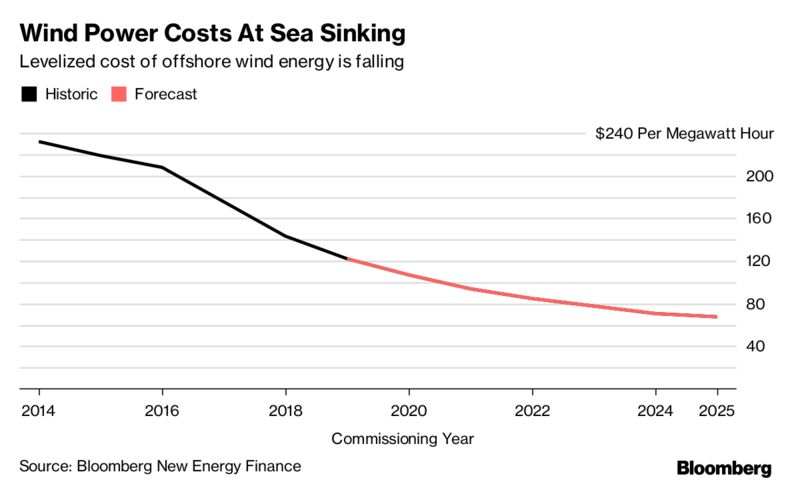
The latest round of renewable auctions has seen two big projects awarded contracts guaranteeing a fixed price of £57.50 per megawatt hour for their output when the blades start turning sometime in the next decade. That is a very big dip from the first round, which required subsidies of some £150/MWh to be profitable. Even the cheapest of previous vintages were north of £110.
It is not so long since British wind power bosses were vowing — amid widespread scepticism — that they could reduce costs to £100/MWh by 2020. Yet these auction results suggest a far steeper decline in offshore costs.
Of course, it is always worth peering behind the headlines to put numbers in context. The sums quoted are 2012 prices. The actual figure in today’s money is therefore £64/MWh; a still subsidy-rich 50 per cent above the current wholesale price of about £40.
The real question though is how the industry can support such a reduction. Take overall costs, for instance. Most studies do not yet point to projects breaking even at £57.50. According to a recent review by the UK’s Offshore Wind Programme Board, so-called levelised costs for new wind projects at the point of commitment (ie not yet built, but button decisively pressed) declined by 7 per cent annually from £142/MWh in 2010-11 to just £97 in 2015-16, driven by factors such as the use of larger turbines and better siting. But while these are impressive figures even they cannot explain a further £40 drop in such a short space of time.
What’s more, by far the biggest component of those costs is capital expenditure, and another study suggests that progress here is much more nuanced. A new report led by Gordon Hughes, a former professor of economics at Edinburgh University, and published by the sceptical Global Warming Policy Foundation, has analysed the reported capital costs of 86 projects across Europe. These show that while technological advances are driving down costs by 4 per cent annually, this gain is being offset as the industry moves out into deeper and more challenging waters. So, depending on where future projects are sited, there may even be no clear downward trend at all.
It may be possible that the auction-winning projects have specific reasons for being able to deliver low prices. For instance, the Hornsea II project sponsored by Denmark’s Dong Energy sits next to a first farm that is also being built by the same company (at far higher rates of subsidy), offering the opportunity to share support infrastructure, as well as the link between the turbines and the grid.
But it is also possible that the promoters view the CFD contract as a pretty loose commitment. “Potentially these bids could be seen as more of an option on future capacity,” said Allan Baker, Société Générale’s global head of power advisory and project finance at Bloomberg’s New Energy Finance Summit last week.
Just three giant wind farms have taken all the capacity in the current auction, which at 3.2GW is equivalent to 60 per cent of Britain’s current offshore fleet. That means the competition is in effect shut out.
The contracts do not represent an absolute commitment. According to the UK government, the developers could withdraw were they unable to obtain financing, with only a limited penalty. What they would mainly lose was the right to pop the same project into a later auction round.
So to the extent, for instance, that contracts depend on yet-to-be developed technologies, such as 15MW turbines, or squeezing contractor prices, there would be little cost to cancelling were developers not to get the deals they hoped for.
And even beyond construction, the CFD could conceivably be revoked by the operator were it prepared to pay a significant, not ruinous, financial penalty, Prof Hughes reckons. So should wholesale prices rise well above the level of the fixed strike price in future, developers might be able to flip across and benefit from (superior) market rates. That might happen, for instance, were the government to introduce a higher carbon price.
Financial Times, September 25 2017
https://www.ft.com/content/f19f4944-a11a-11e7-b797-b61809486fe2
Jonathan Ford
When prices tumble for a product or service, there is generally an observable reason. It might be a cunning technological fix that dramatically boosts productivity, for instance, or the sudden slide in a key input cost. But nothing so obvious can convincingly explain why it is suddenly much cheaper to produce electricity from offshore wind turbines.
***
Check also:
Subsidy-Free Wind Farms Risk Ruining the Industry’s Reputation. By Jess Shankleman
Bloomberg,
http://www.bipartisanalliance.com/2017/09/subsidy-free-wind-farms-risk-ruining.html
***
The latest round of renewable auctions has seen two big projects awarded contracts guaranteeing a fixed price of £57.50 per megawatt hour for their output when the blades start turning sometime in the next decade. That is a very big dip from the first round, which required subsidies of some £150/MWh to be profitable. Even the cheapest of previous vintages were north of £110.
It is not so long since British wind power bosses were vowing — amid widespread scepticism — that they could reduce costs to £100/MWh by 2020. Yet these auction results suggest a far steeper decline in offshore costs.
Of course, it is always worth peering behind the headlines to put numbers in context. The sums quoted are 2012 prices. The actual figure in today’s money is therefore £64/MWh; a still subsidy-rich 50 per cent above the current wholesale price of about £40.
The real question though is how the industry can support such a reduction. Take overall costs, for instance. Most studies do not yet point to projects breaking even at £57.50. According to a recent review by the UK’s Offshore Wind Programme Board, so-called levelised costs for new wind projects at the point of commitment (ie not yet built, but button decisively pressed) declined by 7 per cent annually from £142/MWh in 2010-11 to just £97 in 2015-16, driven by factors such as the use of larger turbines and better siting. But while these are impressive figures even they cannot explain a further £40 drop in such a short space of time.
What’s more, by far the biggest component of those costs is capital expenditure, and another study suggests that progress here is much more nuanced. A new report led by Gordon Hughes, a former professor of economics at Edinburgh University, and published by the sceptical Global Warming Policy Foundation, has analysed the reported capital costs of 86 projects across Europe. These show that while technological advances are driving down costs by 4 per cent annually, this gain is being offset as the industry moves out into deeper and more challenging waters. So, depending on where future projects are sited, there may even be no clear downward trend at all.
It may be possible that the auction-winning projects have specific reasons for being able to deliver low prices. For instance, the Hornsea II project sponsored by Denmark’s Dong Energy sits next to a first farm that is also being built by the same company (at far higher rates of subsidy), offering the opportunity to share support infrastructure, as well as the link between the turbines and the grid.
But it is also possible that the promoters view the CFD contract as a pretty loose commitment. “Potentially these bids could be seen as more of an option on future capacity,” said Allan Baker, Société Générale’s global head of power advisory and project finance at Bloomberg’s New Energy Finance Summit last week.
Just three giant wind farms have taken all the capacity in the current auction, which at 3.2GW is equivalent to 60 per cent of Britain’s current offshore fleet. That means the competition is in effect shut out.
The contracts do not represent an absolute commitment. According to the UK government, the developers could withdraw were they unable to obtain financing, with only a limited penalty. What they would mainly lose was the right to pop the same project into a later auction round.
So to the extent, for instance, that contracts depend on yet-to-be developed technologies, such as 15MW turbines, or squeezing contractor prices, there would be little cost to cancelling were developers not to get the deals they hoped for.
And even beyond construction, the CFD could conceivably be revoked by the operator were it prepared to pay a significant, not ruinous, financial penalty, Prof Hughes reckons. So should wholesale prices rise well above the level of the fixed strike price in future, developers might be able to flip across and benefit from (superior) market rates. That might happen, for instance, were the government to introduce a higher carbon price.
Subsidy-Free Wind Farms Risk Ruining the Industry’s Reputation
Subsidy-Free Wind Farms Risk Ruining the Industry’s Reputation. By Jess Shankleman
Bloomberg,
https://www.bloomberg.com/news/articles/2017-09-19/subsidy-free-wind-farms-risk-ruined-reputations-for-industry
That’s the warning of industry executives, who are cautious about the future of zero-subsidy offshore wind farms planned in Germany this year. Developers led by Energie Baden-Wuerttemberg AG and Dong Energy A/S are betting they can sell the electricity they produce from the wind farms at a profit without any help from taxpayers.
“The offshore wind industry needs to be careful,” Irene Rummelhoff, executive vice president at Statoil ASA’s New Energy Solutions unit, said at the Bloomberg New Energy Finance Summit in London on Tuesday. “They’re taking on these options, and when you get to the delivery date, if they’re not able to build the projects, it will ruin the reputation of the industry.”
The German government may not have the right rules in place to ensure developers actually deliver on their winning bids, said Thomas Karst, senior vice president at MHI Vestas Offshore Wind AS.
“The regulatory power lies with the owners of the concessions and they may or may not get built, so that model from the regulatory point of view doesn’t really work,” Karst said at the same conference.
Winning bidders in the German auctions based business cases on giant wind turbines, soaring as high as The Shard in London and generating as much as 15 megawatts of power each. Those machines haven’t been built yet and aren’t due until the next decade.
“The question is are they actually deliverable? Potentially these bids could be seen as more of an option on future capacity,” said Allan Baker, global head of power advisory and project finance at Societe Generale SA.
The robotic system has reduced rejects from 20 pct to 5 pct, mostly due to improvements in hygiene & handling
Spanish farm produce supplier reduces human workers from 500 to 100 using robots. David Edwards. Robotics & Automation News, September 19, 2017, www.roboticsandautomationnews.com/2017/09/19/spanish-farm-produce-supplier-reduces-human-workers-from-500-to-100-using-robots/14148/
Spanish farm produce supplier El Dulze has reduced its human workforce from 500 down to just 100 with the use of robots, according to a report on FruitNet.com.
The company is said to be using Fanuc robots – LR Mate 200iB models – which use vision systems to even out the production line so the vegetables are not bunched up too close together for packing.
The robots also appear to be picking heads of lettuce and placing them in containers, or plastic packaging.
A total of 68 robots have been installed at the El Dulze facility in Murcia, and they process approximately 550,000 heads of lettuce every day.
The robotic system is also said to have reduced rejects from 20 per cent to 5 per cent, mostly due to improvements in hygiene and handling.
Managing director José Sánchez is quoted by FruitNet.com as saying: “This business has traditionally been labour intensive but today labour is increasingly unavailable.
“This region has a major shortage of labour – many workers in the industry are immigrants but this hasn’t solved our problem.
“As minimal skill is needed we have a real problem with labour and turnover of these workers is high – they just seem to come and go.
“Reducing the amount of people has made everything more hygienic and damage to the lettuces caused by handling is now minimal.”
Spanish farm produce supplier El Dulze has reduced its human workforce from 500 down to just 100 with the use of robots, according to a report on FruitNet.com.
The company is said to be using Fanuc robots – LR Mate 200iB models – which use vision systems to even out the production line so the vegetables are not bunched up too close together for packing.
The robots also appear to be picking heads of lettuce and placing them in containers, or plastic packaging.
A total of 68 robots have been installed at the El Dulze facility in Murcia, and they process approximately 550,000 heads of lettuce every day.
The robotic system is also said to have reduced rejects from 20 per cent to 5 per cent, mostly due to improvements in hygiene and handling.
Managing director José Sánchez is quoted by FruitNet.com as saying: “This business has traditionally been labour intensive but today labour is increasingly unavailable.
“This region has a major shortage of labour – many workers in the industry are immigrants but this hasn’t solved our problem.
“As minimal skill is needed we have a real problem with labour and turnover of these workers is high – they just seem to come and go.
“Reducing the amount of people has made everything more hygienic and damage to the lettuces caused by handling is now minimal.”
Subscribe to:
Comments (Atom)

 Posts
Posts

